
Permitting Reform
As the status quo stands, Tribes and Indigenous communities bear legacies of health repercussions caused by energy extraction. Energy infrastructure traverses Tribal lands, yet many Native communities and reservations do not have access to electricity infrastructure or pay disproportionately high electricity costs.
Permitting reform is needed to codify Indigenous consultation into each step of the federal process, address the legacy of impact, and enable the expansion of clean energy and transmission projects in a just way.
Senate Permitting Bill
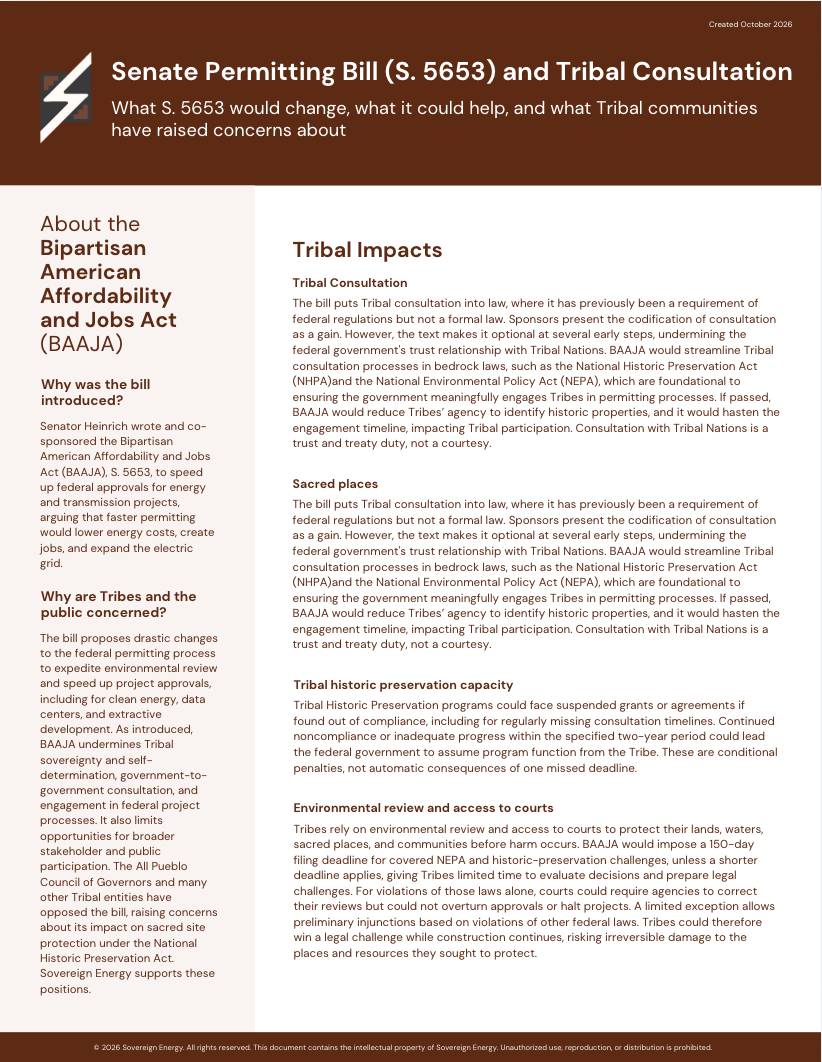
Bipartisan American Affordability and Jobs Act (BAAJA), S. 5653,
-
Senator Heinrich wrote and co-sponsored the Bipartisan American Affordability and Jobs Act (BAAJA), S. 5653, to speed up federal approvals for energy and transmission projects, arguing that faster permitting would lower energy costs, create jobs, and expand the electric grid.
-
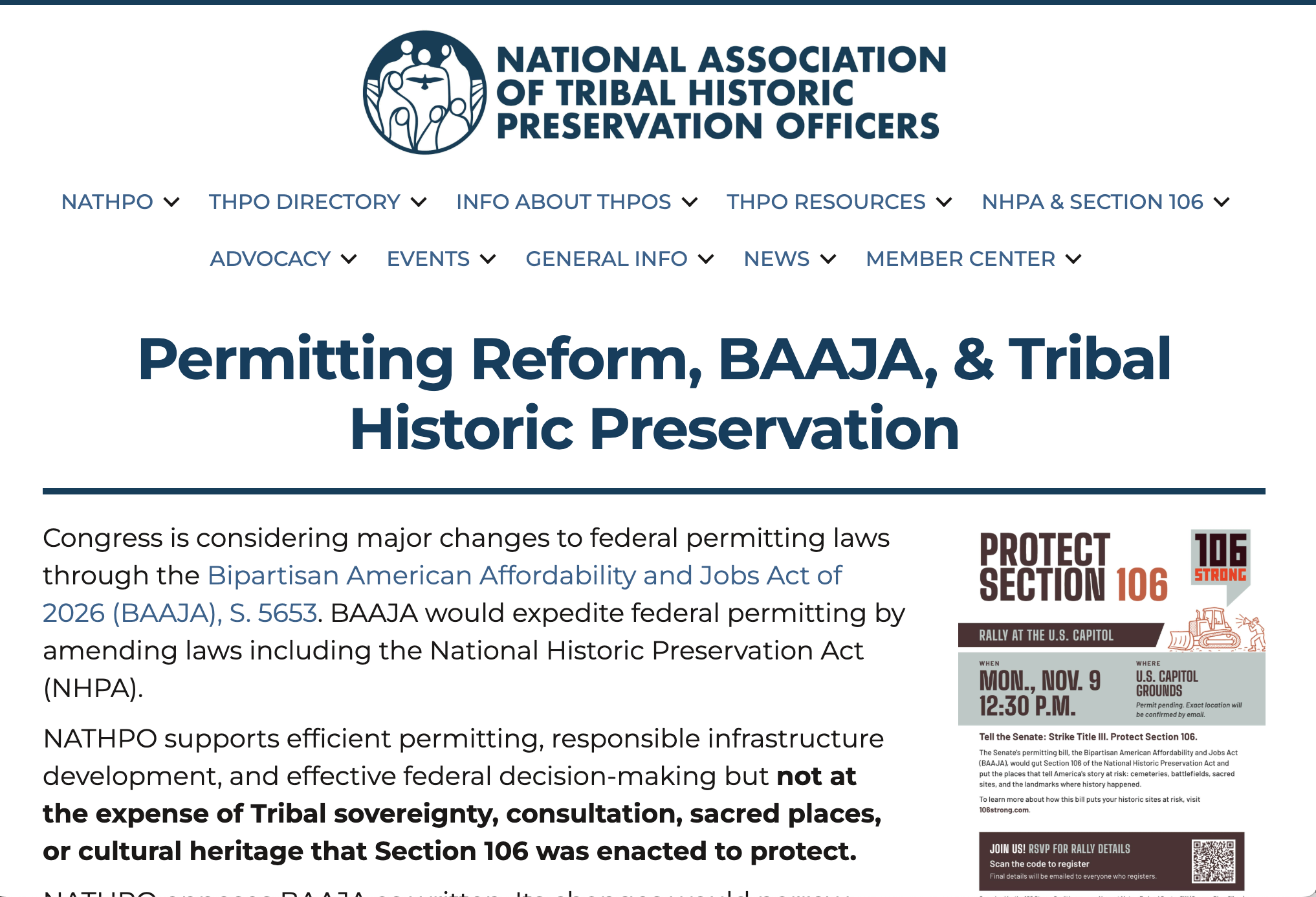
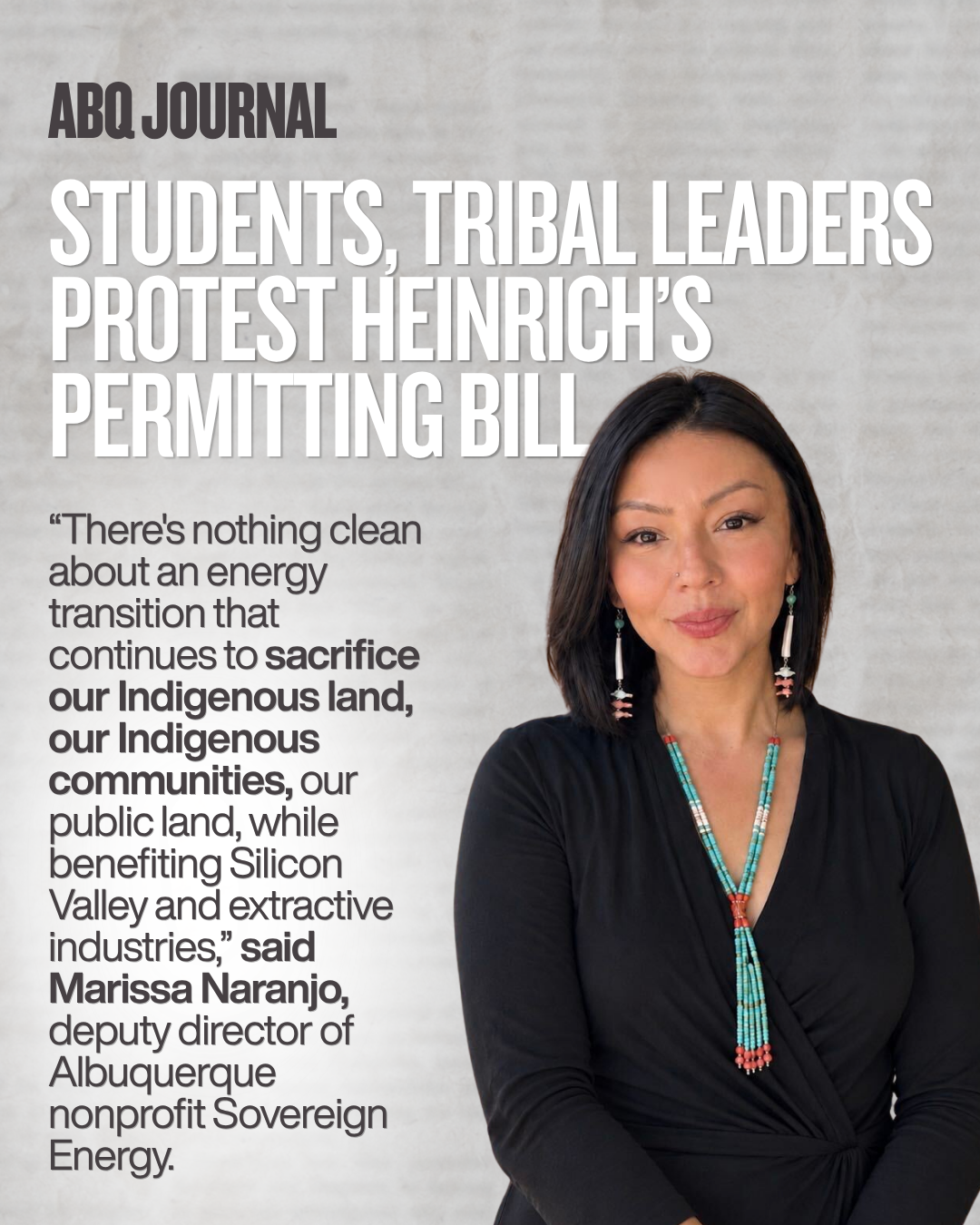
The bill proposes drastic changes to the federal permitting process to expedite environmental review and speed up project approvals, including for clean energy, data centers, and extractive development. As introduced, BAAJA undermines Tribal sovereignty and self-determination, government-to-government consultation, and engagement in federal project processes. It also limits opportunities for broader stakeholder and public participation. The All Pueblo Council of Governors and many other Tribal entities have opposed the bill, raising concerns about its impact on sacred site protection under the National Historic Preservation Act. Sovereign Energy supports these positions.
Tribal Impacts
-
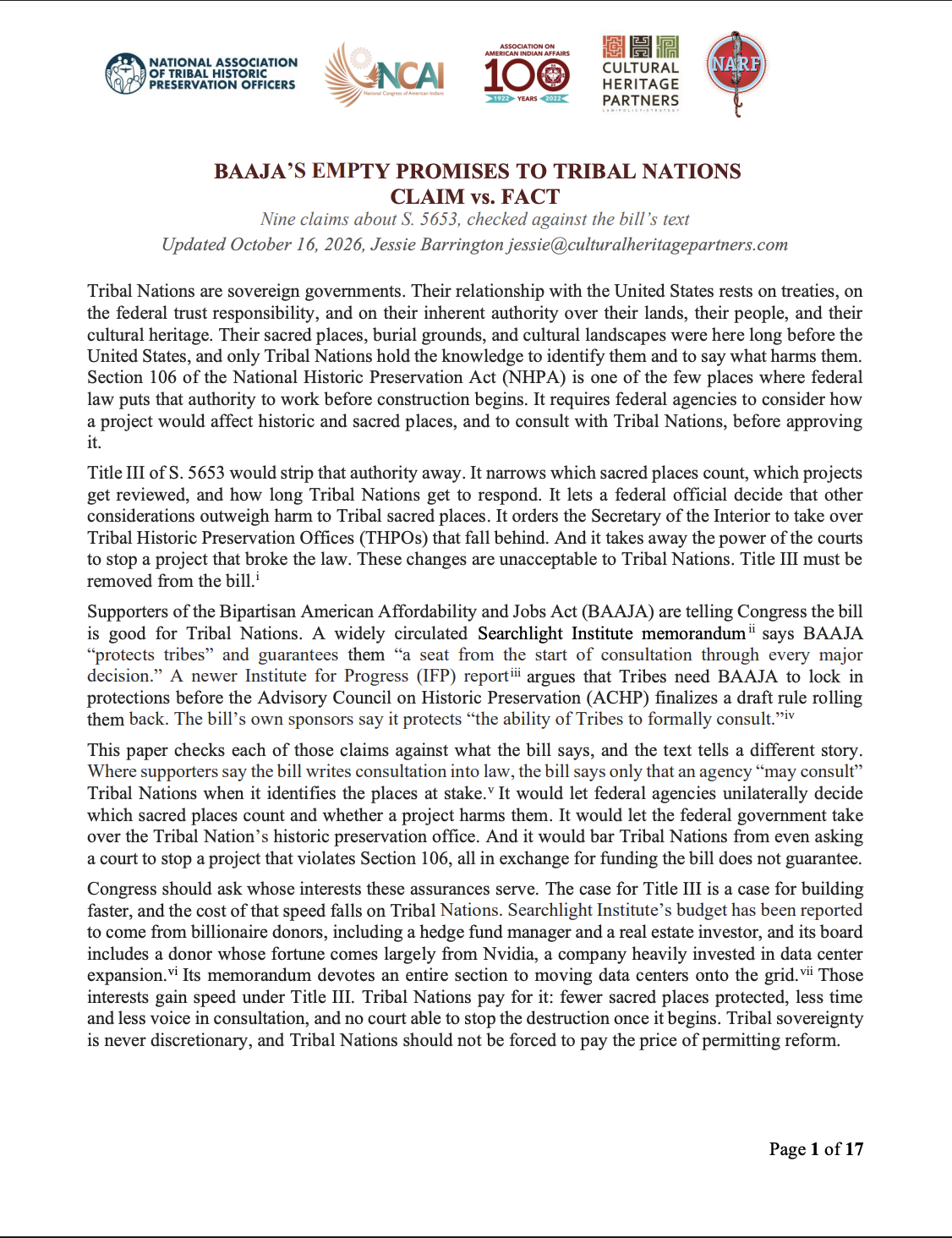
The bill puts Tribal consultation into law, where it has previously been a requirement of federal regulations but not a formal law. Sponsors present the codification of consultation as a gain. However, the text makes it optional at several early steps, undermining the federal government's trust relationship with Tribal Nations. BAAJA would streamline Tribal consultation processes in bedrock laws, such as the National Historic Preservation Act (NHPA)and the National Environmental Policy Act (NEPA), which are foundational to ensuring the government meaningfully engages Tribes in permitting processes. If passed, BAAJA would reduce Tribes’ agency to identify historic properties, and it would hasten the engagement timeline, impacting Tribal participation. Consultation with Tribal Nations is a trust and treaty duty, not a courtesy.
-
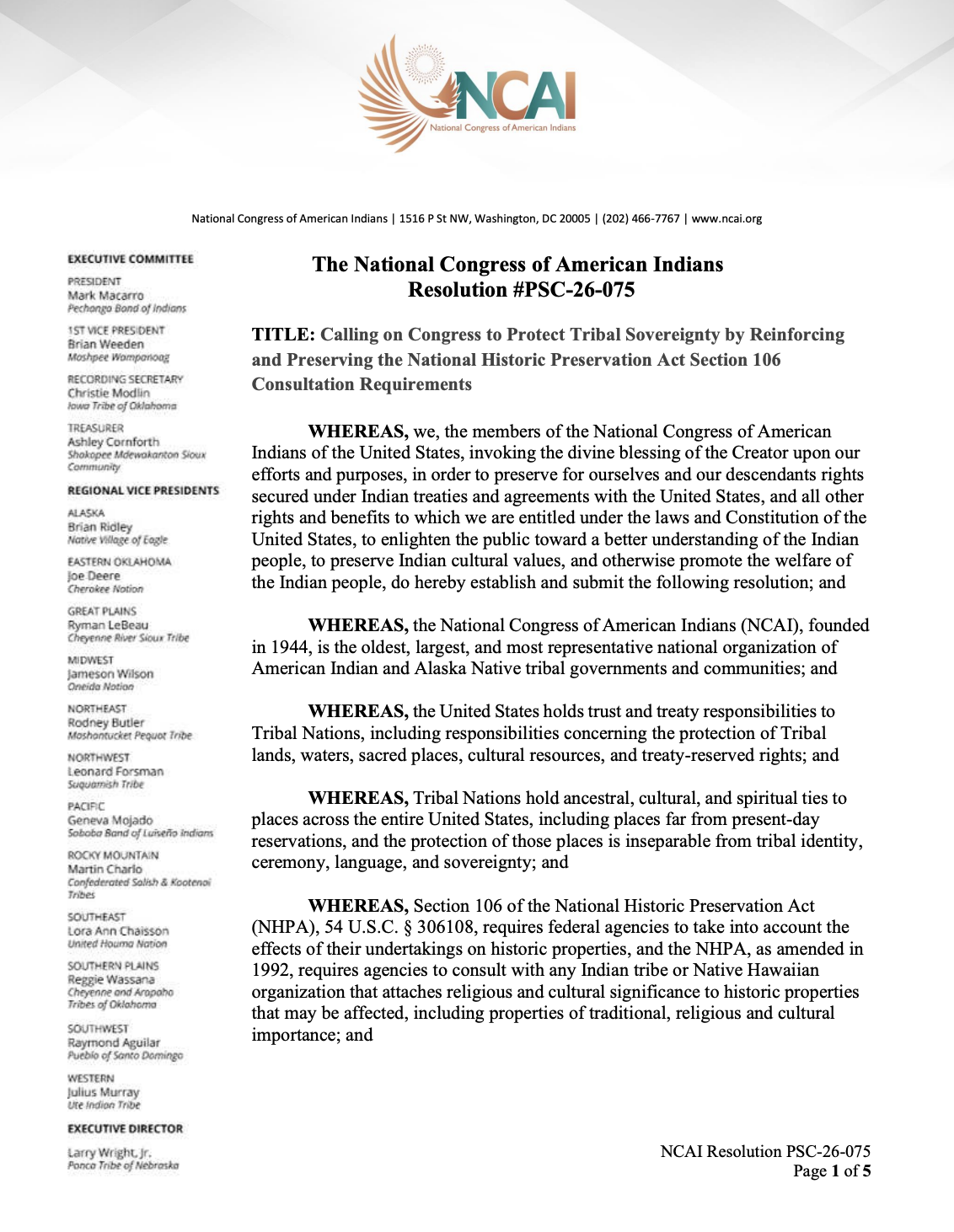
Section 106 of the NHPA governs review of effects on historic properties. BAAJA would make consultation discretionary when agencies first identify affected places and set the review area. It would also let agencies proceed when Tribes miss specified 30-day response windows, without requiring agencies to revisit earlier findings if a Tribe later rejoins. The bill also allows the federal government to exclude a wider list of projects and possible impacts from environmental and cultural review. Further, the bill adds an event-based definition of places of traditional religious or cultural importance, tightly restricting what areas can be deemed important and stripping many sacred areas from protection. These changes give the federal government direction over consideration of sacred places, which could eliminate consideration of living sacred landscapes, cultural relationships, and harm beyond individual sites.
-
Tribal Historic Preservation programs could face suspended grants or agreements if found out of compliance, including for regularly missing consultation timelines. Continued noncompliance or inadequate progress within the specified two-year period could lead the federal government to assume program function from the Tribe. These are conditional penalties, not automatic consequences of one missed deadline.
-
Tribes rely on environmental review and access to courts to protect their lands, waters, sacred places, and communities before harm occurs. BAAJA would impose a 150-day filing deadline for covered NEPA and historic-preservation challenges, unless a shorter deadline applies, giving Tribes limited time to evaluate decisions and prepare legal challenges. For violations of those laws alone, courts could require agencies to correct their reviews but could not overturn approvals or halt projects. A limited exception allows preliminary injunctions based on violations of other federal laws. Tribes could therefore win a legal challenge while construction continues, risking irreversible damage to the places and resources they sought to protect.
Impacts in New Mexico
-
The bill puts Tribal consultation into law, where it has previously been a requirement of federal regulations but not a formal law. Sponsors present the codification of consultation as a gain. However, the text makes it optional at several early steps, undermining the federal government's trust relationship with Tribal Nations. BAAJA would streamline Tribal consultation processes in bedrock laws, such as the National Historic Preservation Act (NHPA)and the National Environmental Policy Act (NEPA), which are foundational to ensuring the government meaningfully engages Tribes in permitting processes. If passed, BAAJA would reduce Tribes’ agency to identify historic properties, and it would hasten the engagement timeline, impacting Tribal participation. Consultation with Tribal Nations is a trust and treaty duty, not a courtesy.
-
Section 106 of the NHPA governs review of effects on historic properties. BAAJA would make consultation discretionary when agencies first identify affected places and set the review area. It would also let agencies proceed when Tribes miss specified 30-day response windows, without requiring agencies to revisit earlier findings if a Tribe later rejoins. The bill also allows the federal government to exclude a wider list of projects and possible impacts from environmental and cultural review. Further, the bill adds an event-based definition of places of traditional religious or cultural importance, tightly restricting what areas can be deemed important and stripping many sacred areas from protection. These changes give the federal government direction over consideration of sacred places, which could eliminate consideration of living sacred landscapes, cultural relationships, and harm beyond individual sites.
-
Tribal Historic Preservation programs could face suspended grants or agreements if found out of compliance, including for regularly missing consultation timelines. Continued noncompliance or inadequate progress within the specified two-year period could lead the federal government to assume program function from the Tribe. These are conditional penalties, not automatic consequences of one missed deadline.
-
Tribes rely on environmental review and access to courts to protect their lands, waters, sacred places, and communities before harm occurs. BAAJA would impose a 150-day filing deadline for covered NEPA and historic-preservation challenges, unless a shorter deadline applies, giving Tribes limited time to evaluate decisions and prepare legal challenges. For violations of those laws alone, courts could require agencies to correct their reviews but could not overturn approvals or halt projects. A limited exception allows preliminary injunctions based on violations of other federal laws. Tribes could therefore win a legal challenge while construction continues, risking irreversible damage to the places and resources they sought to protect.
Resources
Sovereign Energy’s Position
1
Oppose BAAJA due to its threats to Tribal sovereignty, environmental protection, and community participation
1
Consult before rewriting permitting reform. Work directly with Tribal governments and meaningfully engage acequia, land grant, rural, and other affected communities.
3
Invest in effective permitting. Provide sustained staffing and funding for Tribal and state preservation offices and federal agencies, with early coordination and enforceable protections.